

Table of Contents
Intro
By Ryan M. Place
Detroit School of Arts student, Justin Ward, uses puppetry, poetry, theater, visual art, film, and educational media to educate, inspire, and encourage others to think critically, while giving young people an opportunity to be seen and heard.
The first puppet Justin Ward ever made was named Red.
Ward was still a young child when he created the character. During a family trip, he lost Red and remembers being devastated. Although the puppet was gone, his passion for creating characters and bringing them to life remained.
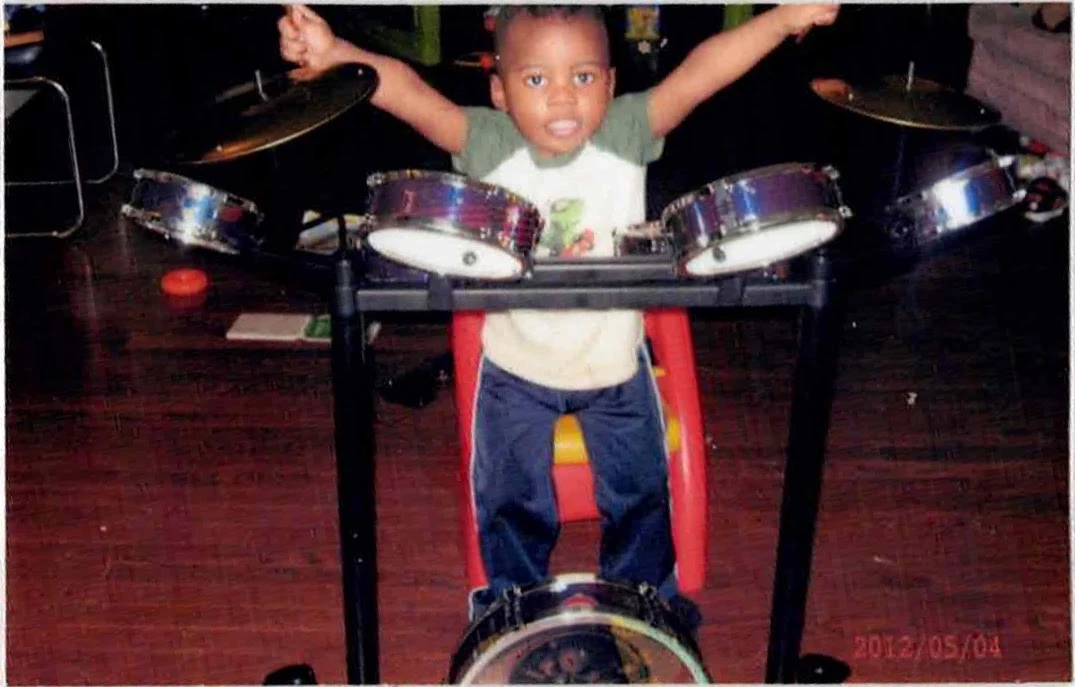
Born on July 13, 2009, in Novi, Michigan, and raised on Detroit’s west side, Ward began experimenting with performance art, visual art, and storytelling at an early age.
“I always loved attention, the camera, and watching movies and TV shows,” Ward said.
But Ward didn’t simply watch his favorite characters. He wanted to become them.
Woody from Toy Story was an early favorite, along with the Cat in the Hat and Clifford the Big Red Dog. Between the ages of 3 and 5, Ward began constructing homemade costumes, transforming himself into characters from his favorite books, movies, and television shows.
“I would dress up and become Woody for real,” he recalled. “I transformed into my favorite characters.”
Today, the 17-year-old Detroit School of Arts junior is a multidisciplinary artist whose creative work spans puppetry, acting, poetry, writing, music, filmmaking, visual art, and production.
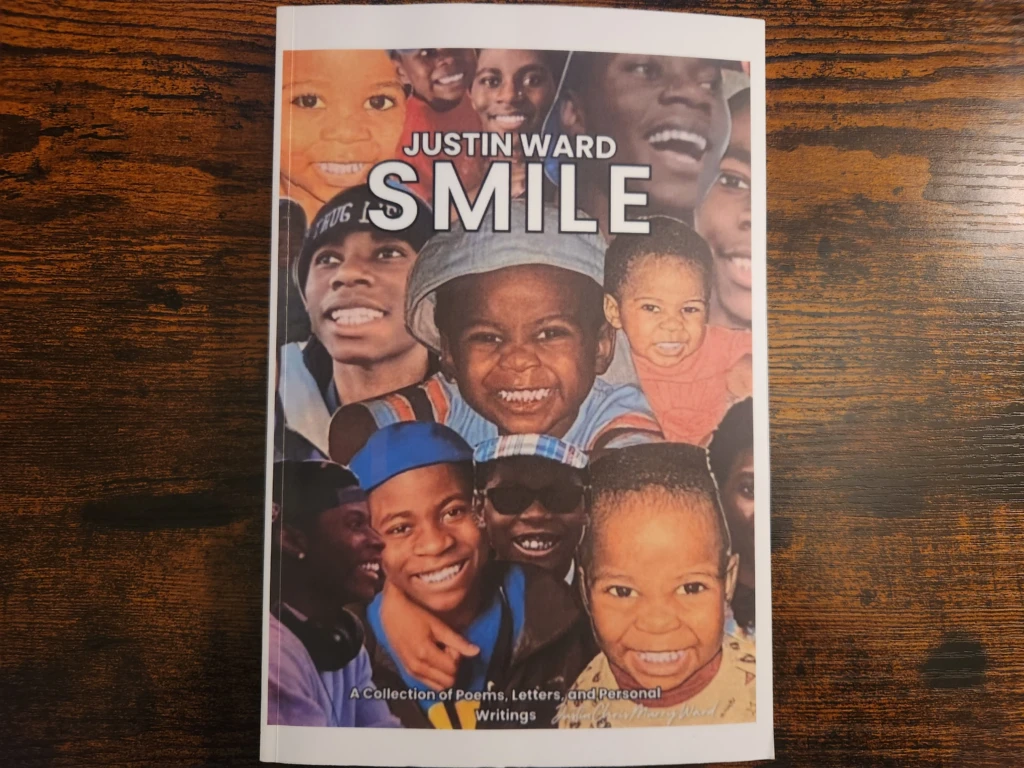
He has built more than a dozen puppets, created the educational children’s television series Draw It Out, produced independent media projects, and published Smile, a deeply personal collection of poems, letters, and journal entries featured alongside his original handwritten pages.
Although his creative projects take many forms, they share a common purpose: using art and storytelling to help others feel seen, heard, and understood.

Growing Up on Detroit’s West Side
Ward describes Detroit as a city overflowing with inspiration and rife with contradiction.
Growing up in the city exposed him to extraordinary creativity. It also exposed him to violence, robberies, shootings, inequality, and other painful realities that appear throughout his writing.
“Detroit has talent,” Ward said. “There are so many talented creative artists here, and most of them are largely unknown, working in the shadows. We need to shine more lights here. You’d be amazed at what you’ll find.”
He draws encouragement from those artists and from the city’s long creative history. At the same time, he refuses to overlook its darker conditions.
“I draw inspiration for my work from the positive things I see in Detroit,” he said. “The other side of that inspiration comes from the violence, the shootings, and the robberies. Not because I’m inspired to take part in those things, but because they inspire me to speak out about them through my art.”
That tension runs throughout Smile. Detroit is not simply a backdrop or a symbol of resilience. It’s the place where Ward is learning to recognize beauty, injustice, community, danger, creativity, and contradiction at the same time.
“Growing up in Detroit has shown me the positives and the negatives,” he said. “My work attempts to hold both realities together.”
Discovering Jim Henson & Building a World Through Puppetry
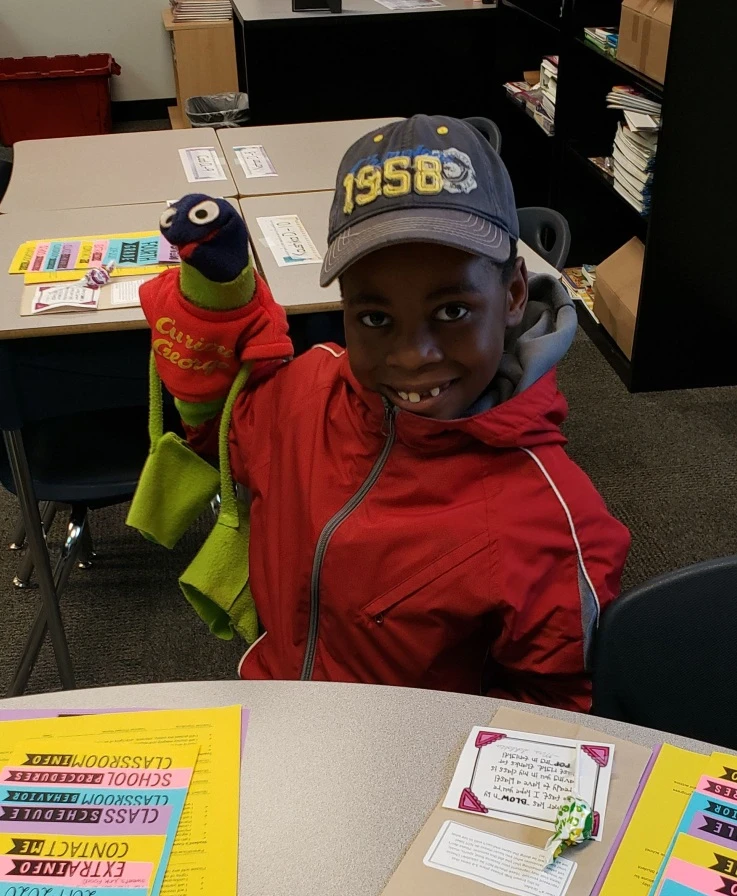
Ward’s interest in pursuing puppetry began at the age of 6, when he discovered the work of legendary puppeteer and filmmaker Jim Henson through a television documentary exploring Henson’s life and the creative world behind The Muppets. The discovery marked a turning point in Ward’s artistic journey.
“I was enthralled,” Ward said. “Jim Henson was a unique and innovative artist.”
Fascinated by the imagination, craftsmanship, and storytelling behind productions such as The Muppets, Sesame Street, and The Dark Crystal, Ward began building puppets of his own and studying how puppeteers could transform ordinary materials into characters that appeared to come alive.
Beyond puppetry, Henson became a creative inspiration for Ward, demonstrating how one artist’s imagination could extend across multiple forms of entertainment and storytelling.
That influence continues to shape Ward’s ambitions as a multidisciplinary artist, connecting his passions for acting, writing, filmmaking, music, visual art, television, and educational programming.
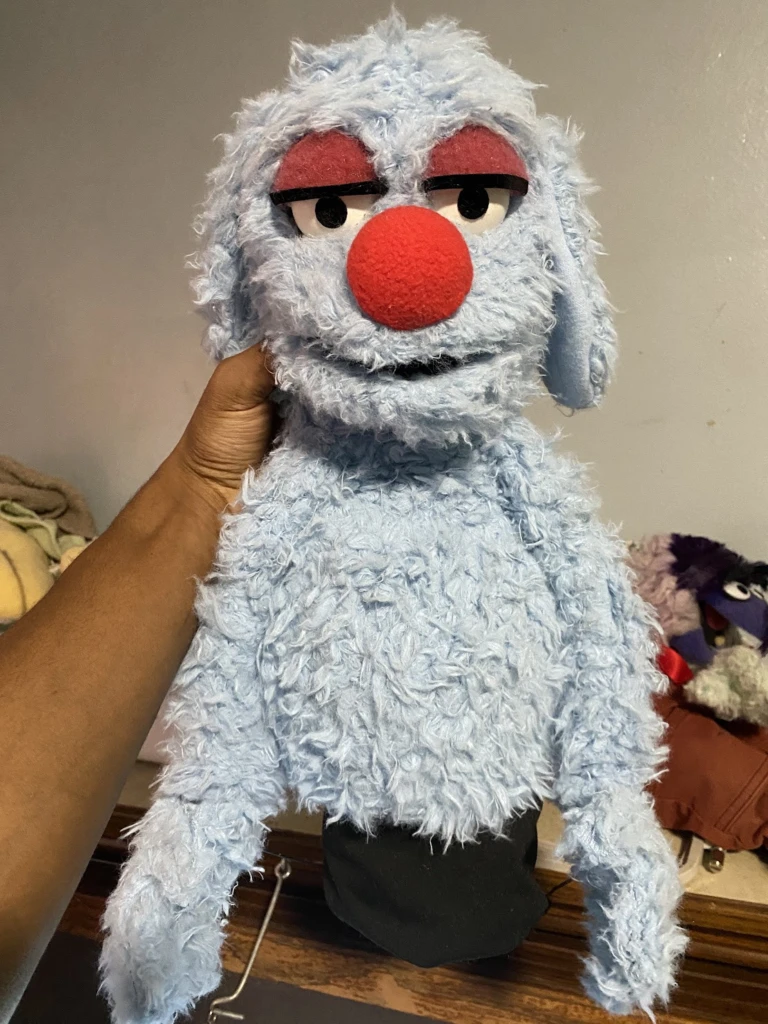
Ward estimates that he has made between 10 and 89 puppets by hand.
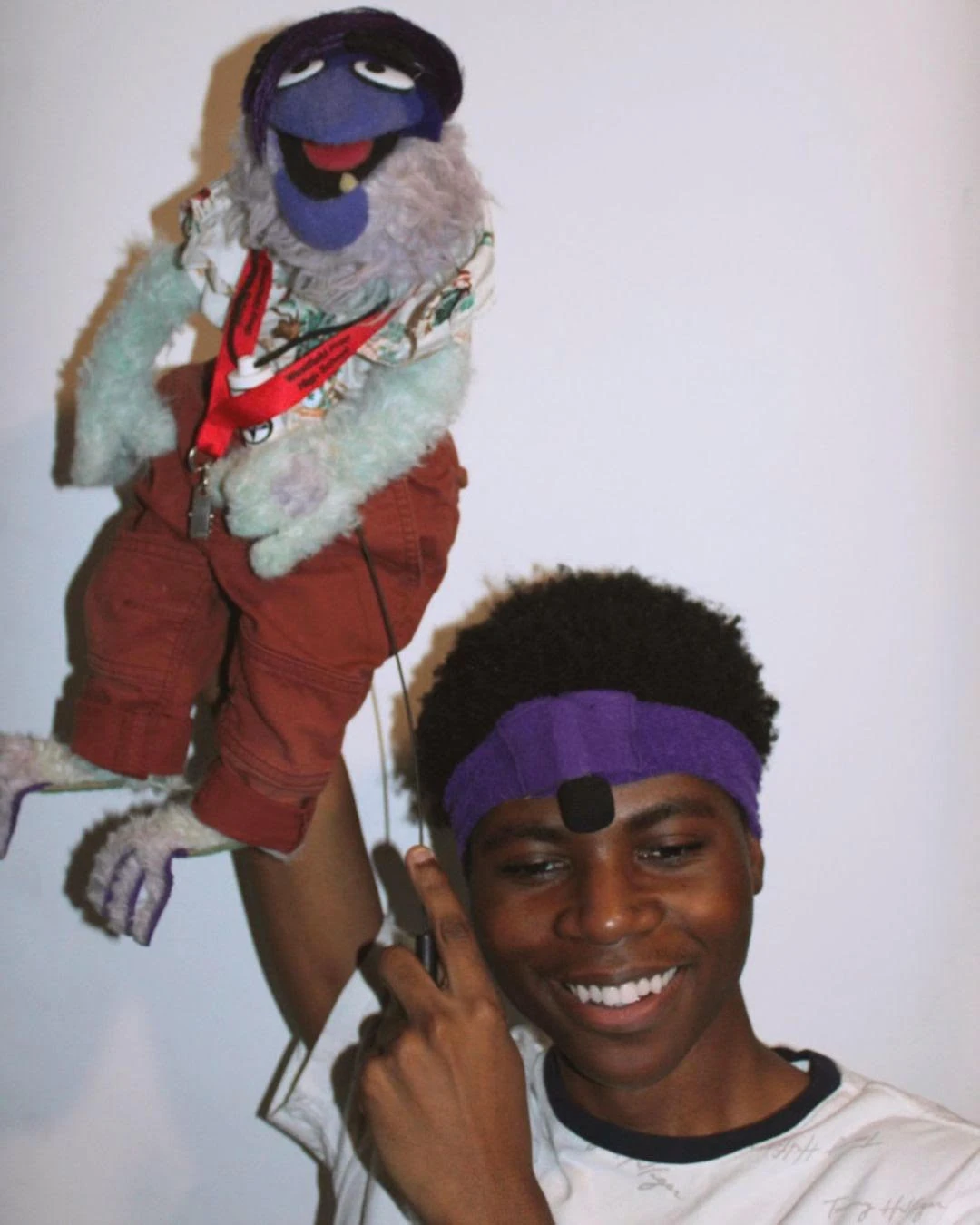
For him, puppet building combines visual art, construction, characterization, performance, voice acting, writing, and movement. He has also performed with Detroit’s Flying Cardboard Theater.
Not everyone immediately understands puppetry as a true art form or recognizes its creative possibilities, if they recognize them at all.
“It takes a special person to recognize the multiple benefits of puppetry and see it as an art form that requires just as much talent and energy as any other,” Ward said. “Several people I’ve met think it’s weird, but I don’t care. I’m going to keep doing it.”
That determination is one of Ward’s defining characteristics.
He accepts constructive criticism from his mother, father, teachers, and other people he trusts, but he remains protective of his creative ownership.
“Everything I do, I create,” he said. “I may ask my mom or dad or someone else for constructive criticism to make my work better, but all of my work is mine and came from my own imagination.”
A puppet begins as fabric, foam, color, and construction. It becomes a character only after Ward infuses it with a voice, personality, movement, and reason to exist.
That process allows him to bring several artistic disciplines together within a single creation.
Behind Smile
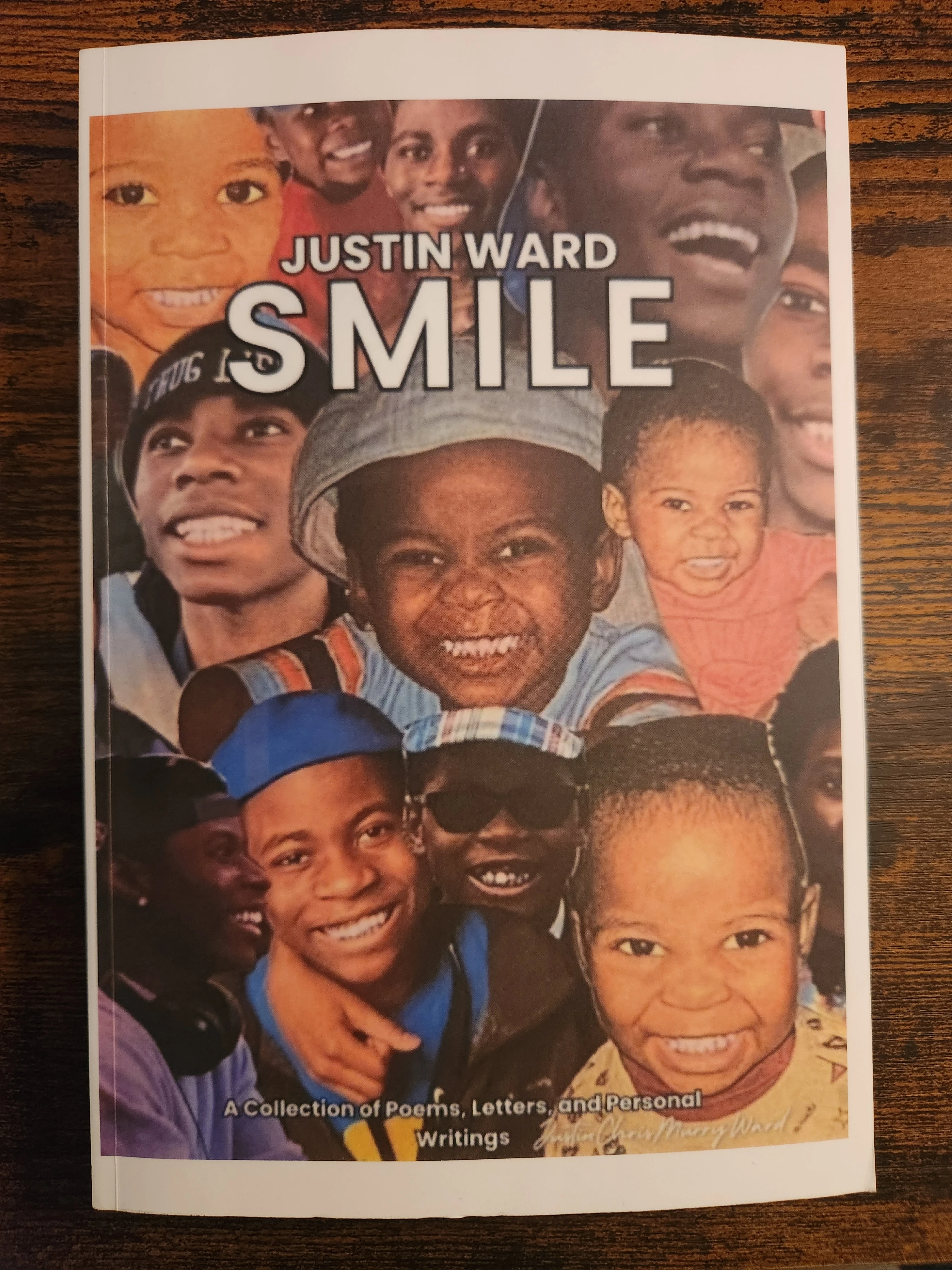
Ward describes his new book, Smile, published on August 8, 2026, as a glimpse into a young artist’s life and the emotions hidden beneath his outward smile.
The self-published collection contains poems, letters, journal entries, political reflections, photographs, and autobiographical writing created between 2021 and 2026. Its subjects include adolescence, depression, identity, racism, family, romantic feelings, violence, self-esteem, social pressure, creativity, and hope.
“Just because you see me or somebody else smiling in a photograph, in a video, or out in public and they seem happy doesn’t necessarily mean they’re smiling on the inside,” Ward said.
A smile can communicate happiness, pride, affection, relief, and confidence. It can also conceal loneliness, fear, anger, insecurity, and emotional exhaustion. Ward wanted the book to explore everything happening beneath the visible expression.
The collection does not present adolescence as a simple journey from sadness to triumph. Pain and hope repeatedly coexist. Anger gives way to reflection. Self-doubt is answered by perseverance but doesn’t permanently disappear.
Rather than claiming to have resolved every struggle, Ward documents what it feels like to continue developing through them. The book also records his growth as both a person and an artist.
“The book shows my transformation as an artist and a person over time,” he said.
One of Smile’s most distinctive features is its presentation of Ward’s original notebook pages beside edited and typeset versions of the same writing.
Readers can see his handwriting, drawings, spelling, crossed-out phrases, altered lines, uneven spacing, and changes of mind. The pages reveal not only what he thought, but how those thoughts emerged. It’s like witnessing the bubbling cauldron of creation.
The typeset versions make the work more accessible. The handwritten pages preserve the urgency and vulnerability of the original moments. Ward deliberately chose not to hide the revisions or imperfections.
“Art and artists don’t have to be perfect. Art is subjective, so everyone’s idea of what makes ‘good art’ will be different,” Ward said. “I wanted to give people an insight into my creative process and show them how my ideas developed from their original form into the finished work.”
That statement provides an important key to understanding the book.
Smile is also an emotional and creative archive. Readers can compare the private moment with the public presentation and see what Ward clarified, changed, removed, or preserved.
Ward’s work moves beyond personal reflection into questions about American history, racism, violence, politics, poverty, incarceration, and public responsibility.
Other pieces examine wealth inequality, neighborhood violence, misogyny, social division, public neglect, and the damage caused when struggling people turn against one another.
These entries range from angry to questioning to hopeful. Together, they show a young writer trying to understand how private pain connects with larger systems.
“There is so much suffering and division in our world, and sometimes it feels like we’ve forgotten how to care for one another. But it doesn’t have to be that way,” Ward said. “We may not all look alike, think alike, or come from the same circumstances, but that doesn’t mean we can’t respect one another. At the end of the day, we’re all human beings, and we all deserve to be treated with dignity and respect. I believe that if we spent more time understanding each other instead of judging each other, we’d begin to see the change that so many of us are waiting for.”
His writing repeatedly returns to the possibility that people can choose to treat one another differently, and that meaningful change begins when they do.
Identity and Vulnerability
Some of the book’s strongest writing examines the pressure placed on young men to conceal vulnerability.
Ward writes about black boys being expected to suppress sadness, fear, insecurity, and emotional pain. When they cry or ask for help, they may be insulted or treated as weak.
His poem “Why This Black Boy Cries” confronts toxic masculinity and the harmful expectations placed on Black boys and Black men to suppress their emotions, conceal vulnerability, and equate emotional expression with weakness.
“I feel that Black men and Black boys are expected to be these emotionless robots,” Ward said. “You’re called weak or a punk if you show any emotion or vulnerability. But we all feel pain.”
Ward rejects that expectation.
“I want kids to know that it’s okay to ask for help,” he said. “It doesn’t make you weak or a punk or a sissy. If you’re hurting, reach out to someone.”
In a reflection dated January 6, 2022, Ward describes feeling mocked because of his skin, clothing, appearance, and social circumstances. He writes about looking into a mirror and beginning to see himself through the judgments of others.
The entry is painful but doesn’t end in surrender. Ward resolves to keep holding on.
His writing insists that fear, tenderness, insecurity, grief, romantic longing, and hope all belong within conversations about masculinity, particularly those concerning the experiences of Black boys and men.

Creating Draw It Out
Ward’s concern for young people extends beyond the pages of Smile.
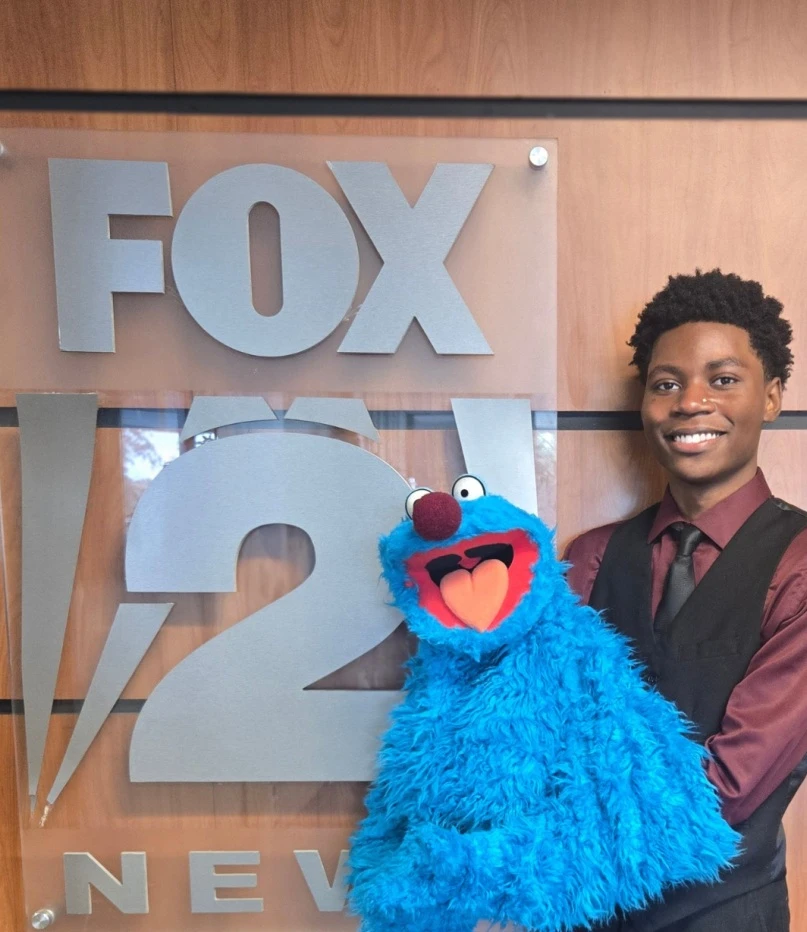
Before the first week of ninth grade, he contacted his future art teacher at the Detroit School of Arts (123 Selden St.), Mrs. Hall, through Microsoft Teams and introduced himself as a student puppeteer.
On the first day of school, Hall invited him to her desk and encouraged him to create an educational program for the district’s Student Hub.
“She said, ‘Why don’t you make an educational show using your puppets and put it on the Student Hub?’” Ward recalled.
That conversation led him to create Draw It Out.
The original idea centered on teaching children how to draw. However, after reading articles about literacy struggles among students in Michigan, Ward concluded that reading needed to become the program’s central focus.
“What I discovered was that there was a huge literacy gap and that kids needed to learn how to read more than how to draw, so I pivoted the show from drawing to reading,” Ward said.
The resulting program combines puppetry, animation, music, live action, and literacy instruction. Puppetry, in particular, plays an important role in the show’s format.
“We use puppets to help kids get engaged,” Ward said.
He designed the program around the idea that children do not all connect with information in the same way. There is no “one-size-fits-all” approach to learning. Some respond to puppets, while others respond to animation, music, or live action.
Ward believes educational media should make children want to participate.
Ward sees puppetry as an especially effective way to reach younger learners.
“When I use puppetry for Draw It Out, I’ve found it’s a very engaging art form, especially for younger people,” he said. “Elementary kids respond far more deeply to a puppet or animated character than a person or an adult.”
A puppet can make a lesson feel less intimidating. Mistakes can become part of a scene instead of evidence that a child has failed.
Ward did not watch Sesame Street as a child. Instead, he remembers watching literacy-focused programs such as Reading Rainbow. His parents introduced these shows to help his older brother, who has autism, develop his communication and reading skills. Their goal was to help him communicate, and they saw reading as an important first step. Because the programs were helping his brother, his parents believed they could also benefit Ward.
Those experiences helped him recognize that children learn and communicate differently. A puppet, animated character, song, drawing, or story may help a child approach material that otherwise feels inaccessible.
Ward wants Draw It Out to build more than reading ability. He wants it to strengthen confidence.
“You have to believe in yourself,” he said. “We all have the capacity to generate our own inner strength.”
His message to children is grounded in a principle he also applies to his own life.
“I don’t need you to believe in me because I believe in me,” he said. “As long as you believe in what it is you are doing. You will be successful at it ”
Finding Mentors at Detroit School of Arts
Ward is currently a 17-year-old junior at the Detroit School of Arts, where students study film, theater, music, dance, visual art, broadcasting, and other creative disciplines.
The school provides an immersive environment where art is treated as serious and worthwhile.
Educators have helped him develop his ideas and technical abilities, including Mrs. Hall (DSA Visual Art Teacher), whose encouragement and care inspired him to create Draw It Out; Mrs. Green, the school’s CTE Director; and Mr. Willis, the school’s special instructor of multimedia.
Their support has helped him understand how an idea develops into a finished production.
A television program requires more than a concept. It needs writing, characters, performers, cameras, sound, editing, planning, and an audience. Ward’s education is helping him see how those elements connect. He values guidance while maintaining ownership of his creative direction.
“I may get feedback on how to make my work better,” he said, “but all my work is mine.”
On May 04, 2026, Ward was selected as a Detroit Public Schools Community District (DPSCD) Influencer.
He applied by submitting a video and was chosen by a committee along with being interviewed on why he wanted to become an influencer . His responsibilities include producing weekly videos about school and community topics.
One of his recent assignments addressed the district’s annual Count Day, which helps determine school funding.
Ward sees the position as another way to redirect media toward a constructive purpose.
“Social media can be used as a positive tool rather than the sewer of negativity I feel it usually is,” he said.
The role brings together several parts of his creative identity, including performance, filmmaking, communication, student advocacy, and Detroit storytelling.
Social media nevertheless remains complicated for Ward. It can give young artists an audience, but it can also pressure young people to compare their appearances, accomplishments, and lives with carefully selected images of other people.
“Kids these days are constantly on social media, and in my opinion, being exposed to it at such an early age can really affect how they see themselves,” Ward said. “It can make girls feel self-conscious when they see airbrushed images of women and start believing that’s what it takes to be beautiful, or make boys feel like they have to change their faces or appearances just to look good. When you’re constantly
comparing yourself to unrealistic standards, you can start believing that who you are naturally isn’t good enough”.
That concern connects directly with Smile. A happy photograph may represent a genuine moment, but it doesn’t necessarily reveal the true emotional state of the person pictured.
What Comes Next
Ward is developing additional work through Red Couch Productions. He recently launched a new literacy-focused company, Pages in Paws, an educational multimedia and production company that now helps produce Draw It Out alongside Red Couch Productions. The company also aims to put books into the hands of children in Detroit’s underserved, low-income neighborhoods while continuing to develop additional literacy-focused programming for young audiences.
His plans include expanding the reach of Draw It Out, creating more television projects, writing stage plays, producing more episodes of the comedy program Off Scripts, and eventually publishing an autobiography.
He is also a fan of comedy, horror, thrillers, biographies, documentaries, and true stories, particularly films produced from the 1970s through the early 2000s.
Rather than selecting a single medium, Ward wants to continue moving among them.
Poetry allows him to communicate internal experiences. Puppetry helps him build characters and reach children. Film combines performance, imagery, sound, and narrative. Educational media allows him to direct those skills toward a public purpose.
“I want to become bigger than bubble gum,” he said.
Ward understands what it feels like to create something that other people may not immediately understand or appreciate.
His advice to young writers and artists is direct.
“Do you have something you think is worth sharing with others?” he asked. “Then share it! What are you waiting for? There’s never a perfect time. Just do it.”
He believes many creators reject themselves before anyone else can encounter their work.
“Many artists don’t get seen because they think their work is not good enough,” Ward said.
A young artist may encounter criticism, indifference, or misunderstanding. Ward doesn’t believe those responses determine the work’s ultimate value.
“You might not be able to see it at this exact moment,” he said, “but your work has value, immense value.”
His own experience with puppetry has reinforced that belief. Some classmates have found his interest unusual, but their reactions have not changed his commitment.
“Several kids I’ve met think my love of puppetry is weird,” he said, “but I don’t care. I’m going to keep doing it.”
Final Thoughts
Justin Ward’s story is not simply about a teenager working in several artistic forms. It’s about a young man using those forms to make emotional life visible.
Smile preserves the evidence of that process: the handwriting, revisions, anger, doubt, humor, political questions, romantic hopes, and attempts at self-understanding.
“People frequently use their smile as camouflage,” Ward said.
His book asks readers to look beyond that camouflage.
Draw It Out directs the same creative instinct toward younger children. Through puppets, animation, music, and storytelling, Ward hopes to help students approach reading with greater interest and confidence.
His puppets and poems may appear to occupy different worlds, but they serve a similar purpose. Both help people approach difficult subjects through characters, language, imagination, and emotion.
The first puppet he made, Red, disappeared during a family trip.
More than a decade later, Ward has created a growing cast of characters, published his private writing, developed educational programming, and is establishing his voice as a young Detroit storyteller.
The original puppet may be gone, but the creative spark behind it remains.
Keep your eye on Justin Ward and his work. We look forward to his future projects and the continued evolution of his multifaceted artistry.
Links
Ryan M. Place is a Michigan writer and entrepreneur. He is the founder of the Detroit Festival of Books (Detroit Bookfest), Michigan’s largest book festival, and Detroit Vinylfest, an annual music and record festival, both held at Detroit’s historic Eastern Market. Linkedin profile.