

Table of Contents
Intro
Detroit has long produced writers whose voices were shaped not by comfort, but by consequence.
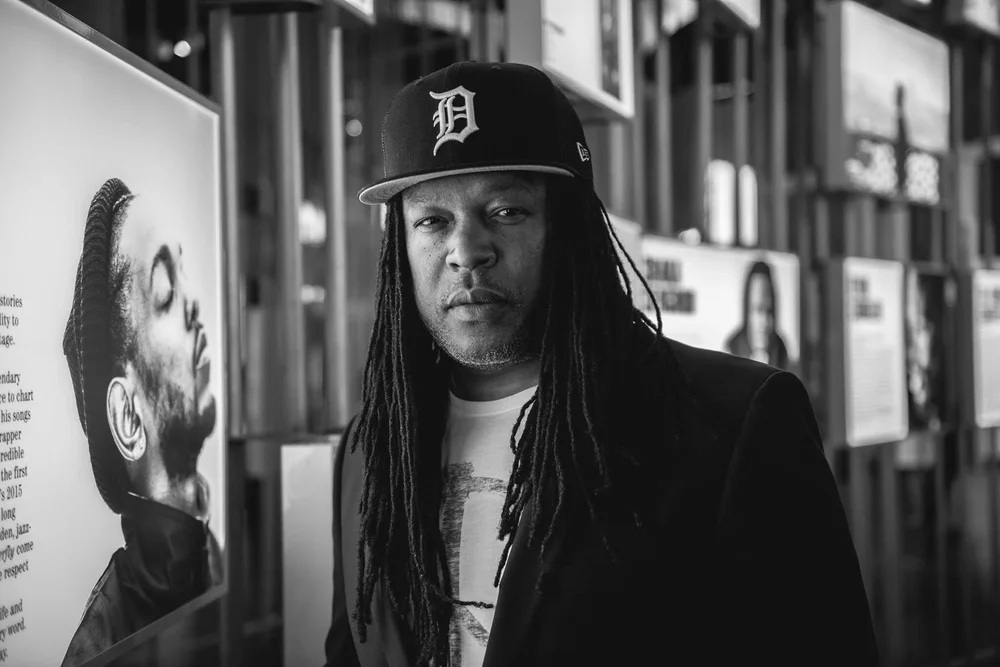
Shaka Senghor is an author, educator, entrepreneur, and one of the city’s top contemporary literary figures.
Born in 1972, Senghor is originally from Detroit’s east side, before moving to the west side during his teenage years.
In 1991, his life took a tragic turn when he was incarcerated for murdering a man in Detroit on Blackstone near Fenkell ave during a crack deal. He would ultimately serve 19 years in prison, from 1991 to 2010.
“I did 19 years in prison. I was in 11 different prisons,” Senghor says. “Michigan Reformatory, Oaks, Cooper Street, Baraga Max, Marquette, Newberry, Carson City, Adrian, Riverside, Muskegon, and Standish Max. I was a hellraiser, an organizer, so they kept moving me. Even pre-prison, I tried to escape from the Wayne County Jail.”
Literature Found Behind Bars
While incarcerated, Senghor became an advocate, organizer, and tutor. He worked in a law library writing appeals for other prisoners, noting that the average reading grade level in prison is around third grade.
“I was literate, so that was already an advantage,” he explains. “That literacy allowed me to help others and eventually to help myself. I started writing in solitary confinement where I did 4.5 years straight in solitary from 1999-2004.”
It was also during this time that Senghor began writing fiction. In 2008, while still incarcerated, he self-published a novel called Crack Volume 1. The book attracted unexpected attention from the prison system.
“The Michigan Department of Corrections (MDOC) sued me because they thought I had a book deal,” Senghor says. “I didn’t. I self-published it.”

Literary Lineage: Goines and Slim
“Detroit has a great history of literature and authors,” he says. “Donald Goines is a personal favorite, especially Dopefiend (1971). That book really opened my imagination to the power of literature. It helped me realize that you don’t need permission to tell a story that matters to you.”
“Elmore Leonard and Mitch Albom have also been great inspirations.”
“Chicago’s Iceberg Slim wrote Pimp (1969). That was another book we read in prison. The content is sordid, yes, but Slim was a brilliant writer.”
“Those bodies of work led me to read Malcolm X, philosophy, and all sorts of different works.”

Coming Home and Writing in Public
When Senghor was released in 2010, he immediately began building a life centered on writing.
“In 2010 when I got out, I started writing album reviews for Detroit’s weekly newspaper, The Michigan Citizen,” he recalls. “I got out in June, my first byline was in September.”
The opportunity came unexpectedly. “One of the writers couldn’t make it one day. They needed someone to cover the story, so I did it. Loren Harper was in a movie called Blessed and Cursed. He was also doing a drug treatment program, and I was intrigued by his real life-story more than the movie. The public loved it. After that, I started covering stories all over the city.”
At the same time, Senghor was selling his own books, often literally out of his car.
“When I came home, I was selling books out of the trunk of my car,” he says. “I was selling books on Belle Isle, Rounds on the Square, Cutters Bar, Eastern Market, Bert’s, Snookers, Harlem World, strip club parking lots after hours, you name it.”
Rejection, Persistence, and Global Reach
Senghor’s early years as an author were marked by rounds of rejection.
“I was often rejected by some local bookstores,” he says. “They felt that because my books were self-published, they weren’t good enough to be on their shelves. Still, I maintained my focus.”
“I was selling a book a day. Mostly rejection after rejection. Then I started selling more. I was shipping books out of my garage to other countries.”
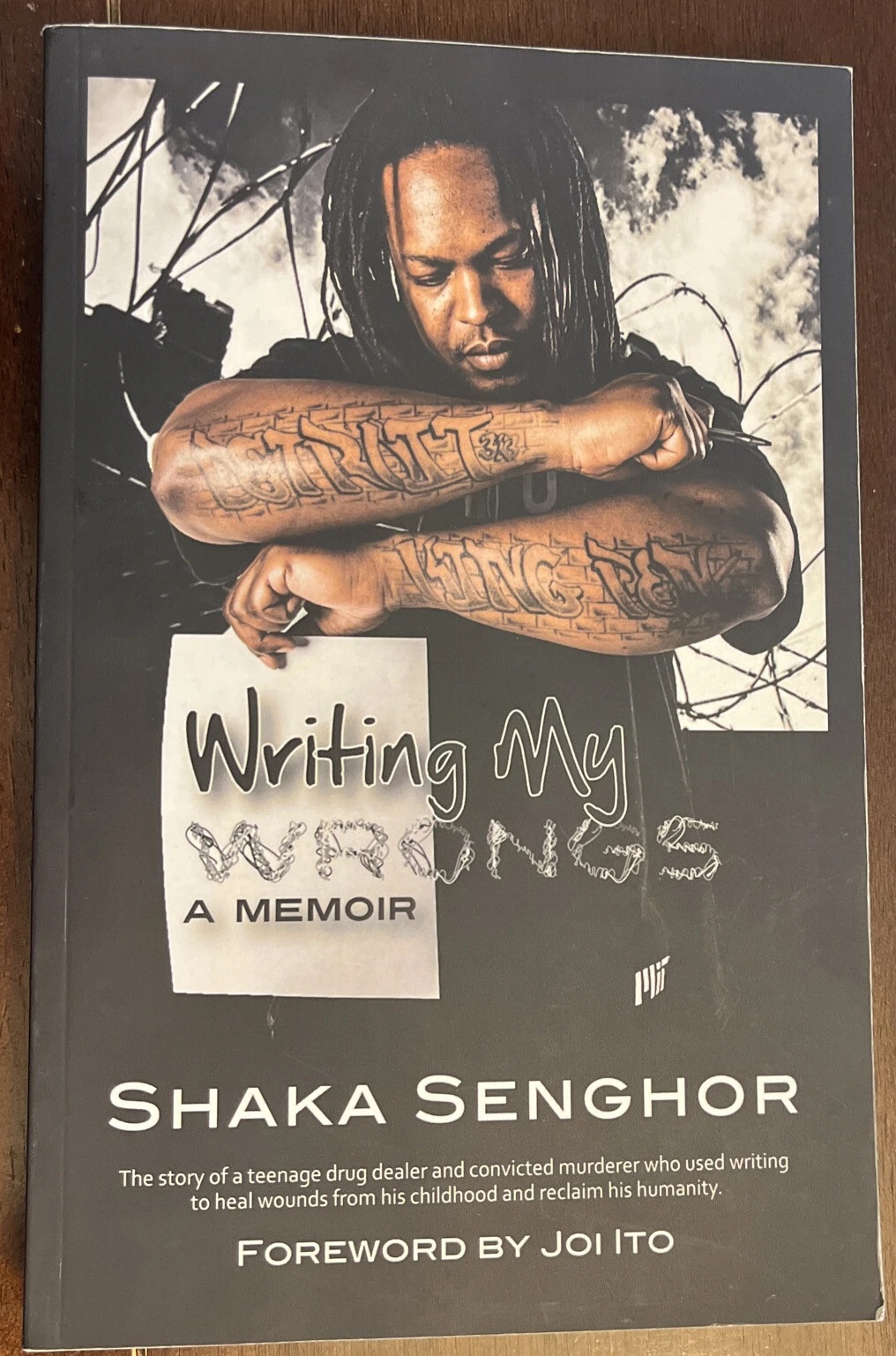
Those efforts eventually paid off. His memoir Writing My Wrongs originally published in 2013 and became a New York Times bestseller in 2016, launching Senghor onto a global stage and opening doors to speaking, teaching, and policy work.
Oprah, Confidence, and Craft
A pivotal moment came when Oprah Winfrey discovered Senghor’s work.
“My first interview with Oprah aired in 2016, she had the self-published book I wrote,” Senghor says. “She called Writing My Wrongs one of her favorite memoirs of all time. That experience gave me the confidence to continue.”
Yet Senghor emphasizes that confidence never replaced discipline.
“I’m a student of the craft,” he says. “I’m a reader, a deep appreciator of the written word. I didn’t want anyone to make allowances for me because I had been in prison.”
Teaching, Awards, and Youth Storytelling
Following his literary success, Senghor won awards and began working directly with young people. He won the NAACP Great Expectations Award and the Ford Man of Courage Award, among many other national awards.
“I was doing work at Cody High School and Tri-County (an alternative high school in Southfield), helping kids tell their own stories,” he says.
His academic career also expanded. Senghor has been a University of Michigan professor (and co-founder of the class called the Atonement Project), a TED Talk presenter, a fellow at MIT Media Lab, a fellow at Virginia Tech, and a nationally recognized voice on justice, literacy, and transformation.
How to Be Free: A Magnum Opus
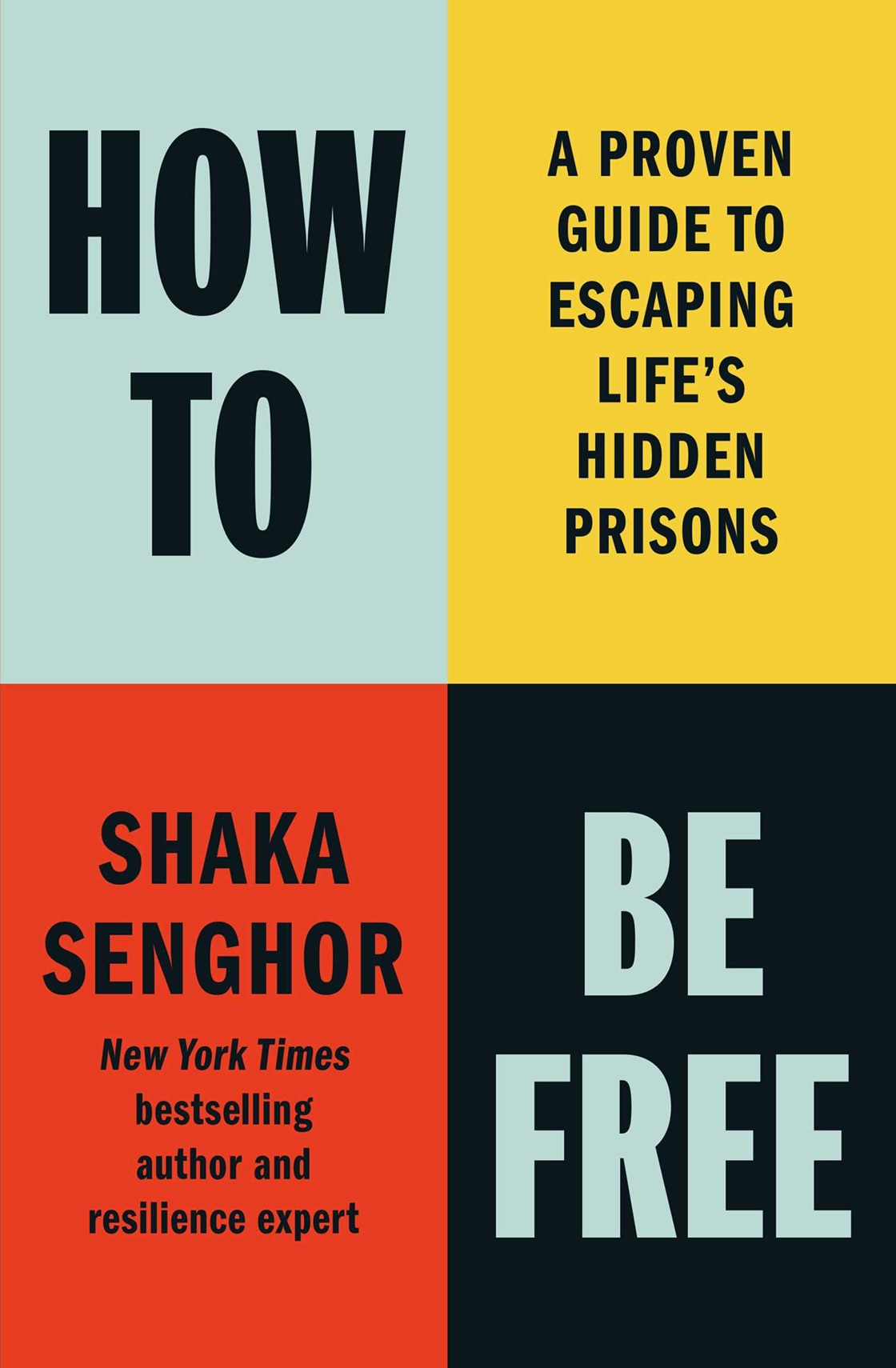
Senghor’s most recent book, How to Be Free: A Proven Guide to Escaping Life’s Hidden Prisons, was published in September 2025 by Authors Equity and distributed by Simon & Schuster.
“This book is my magnum opus,” he says. “It’s a reflection of the principles I live by. It took a lot of work, effort, luck, and especially a mindset shift to overcome internal and external barriers, to escape those hidden prisons we keep ourselves inside of.”
He describes the book as “a guide to help people navigate tough things in life and break through your own self-created prisons.”
Giving Back, the Literary Lounge, and the Art of Being Relentless
Though Senghor currently lives in Mid-City central Los Angeles, Detroit remains central to his life.
“My family is in Detroit,” he says. “I work with the Boys & Girls Club of Southeastern Michigan, the Sean Anderson Foundation (Big Sean), and my friend Clement Brown (aka: Fame) at his store Three Thirteen on the Avenue of Fashion.”
“Inspired by my work to transform my own life and purpose, the Boys & Girls Club approached me about wanting to name the literary lounge The Shaka Senghor Literary Lounge,” he says. “Unbelievable tribute and honor. It still feels surreal.”
The lounge will open in February 2026 inside Michigan Central Station, a creative hub that also includes spaces from major cultural figures.
“Big Sean has a recording studio at MCS with SAF (Sean Anderson Foundation). Usher has a spot there called Usher’s New Look (UNL). The revitalization has been phenomenal,” Senghor notes.
“The lounge is a testament to the power of the written word,” Senghor says. “Reading books shifted the way I think about life.”
“My journey from selling books out of the trunk of my car around Detroit to being named on the Shaka Senghor Literary Lounge is truly a blessing.”
Senghor has shared his story on some of the world’s largest platforms, including a landmark recent appearance on The Joe Rogan Experience.
“Joe Rogan was a great guy,” Senghor says. “We had a real deep conversation. He was down to go on the journey of the whole story, not just snapshots.”
Asked what advice he offers readers and especially young people, Senghor is clear.
“To succeed in life and overcome your barriers, you need to be curious, willing to take risks, and invest in learning,” he says. “Every job I’ve had, I created those opportunities by being curious, fearless, and willing to fail. It’s been a hard pathway from there to here.”
His closing message is simple and uncompromising:
“I want readers—especially young readers—to know that they embody greatness. Stay curious and relentless, and you can do anything you want in life.”